



Families are hearing more and more about digital health, shared records and better joined-up care — but what does that actually mean when a loved one receives support at home? Here is a plain-English look at why the NHS’s latest digital plans matter and how they could improve everyday care.
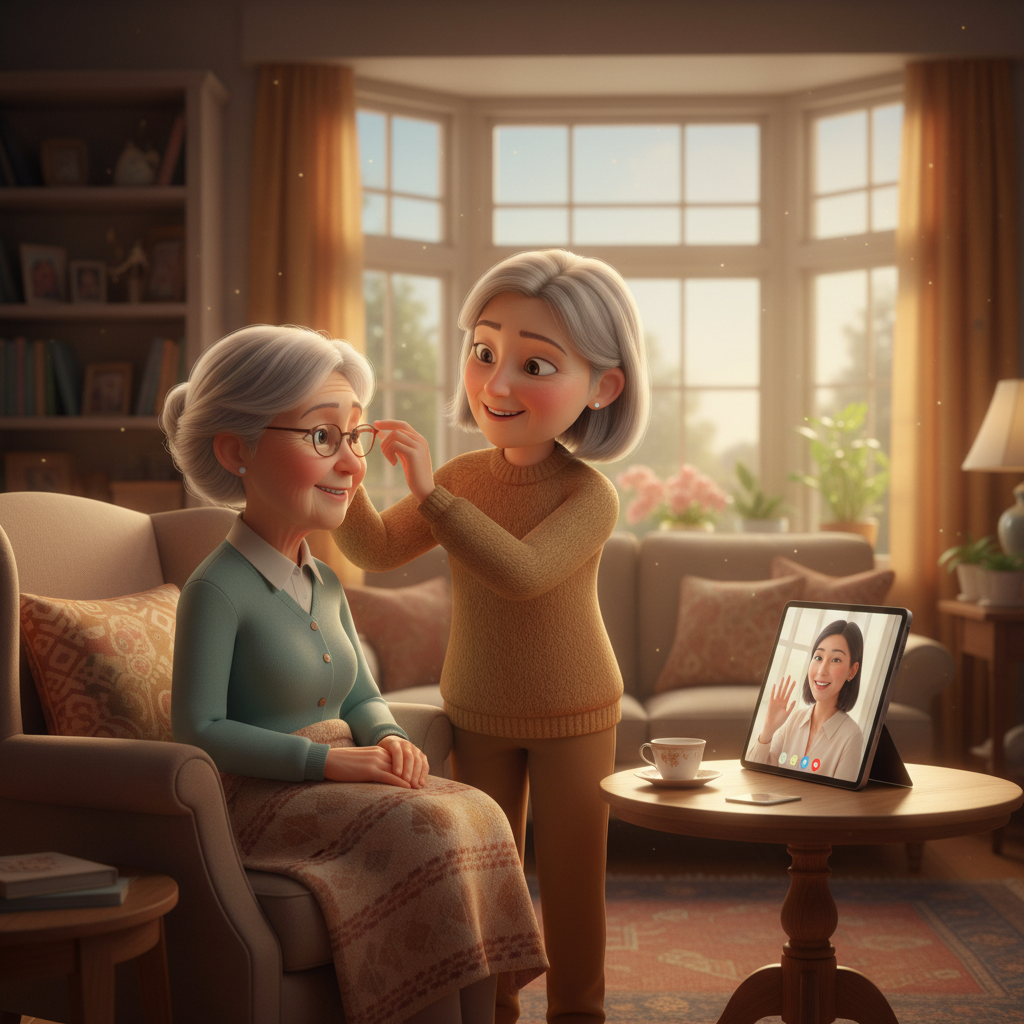
Families are hearing more and more about digital health, shared records and better joined-up care — but what does that actually mean when a loved one receives support at home? Here is a plain-English look at why the NHS's latest digital plans matter and how they could improve everyday care.
What Is the NHS Digital Health Framework?
Over the past few years, the NHS has been quietly — but significantly — reshaping how health and care information is shared across different services. The NHS digital health framework for 2026 builds on years of groundwork, including the rollout of Integrated Care Systems and the expansion of shared care records across England. The aim is straightforward: when a GP, a district nurse, a hospital consultant and a home care worker are all involved in supporting one person, they should all be working from the same up-to-date picture.
At the heart of this are tools like the NHS App, which now allows patients to view their GP records, order repeat prescriptions and access referral letters. But it goes much further than that. NHS England is pushing hard for what it calls "interoperability" — the ability of different digital systems to communicate with each other. That means a care worker arriving at someone's home could, in principle, have visibility of recent changes to medication, a hospital discharge summary, or a new diagnosis — all without the patient or their family needing to relay that information by telephone.
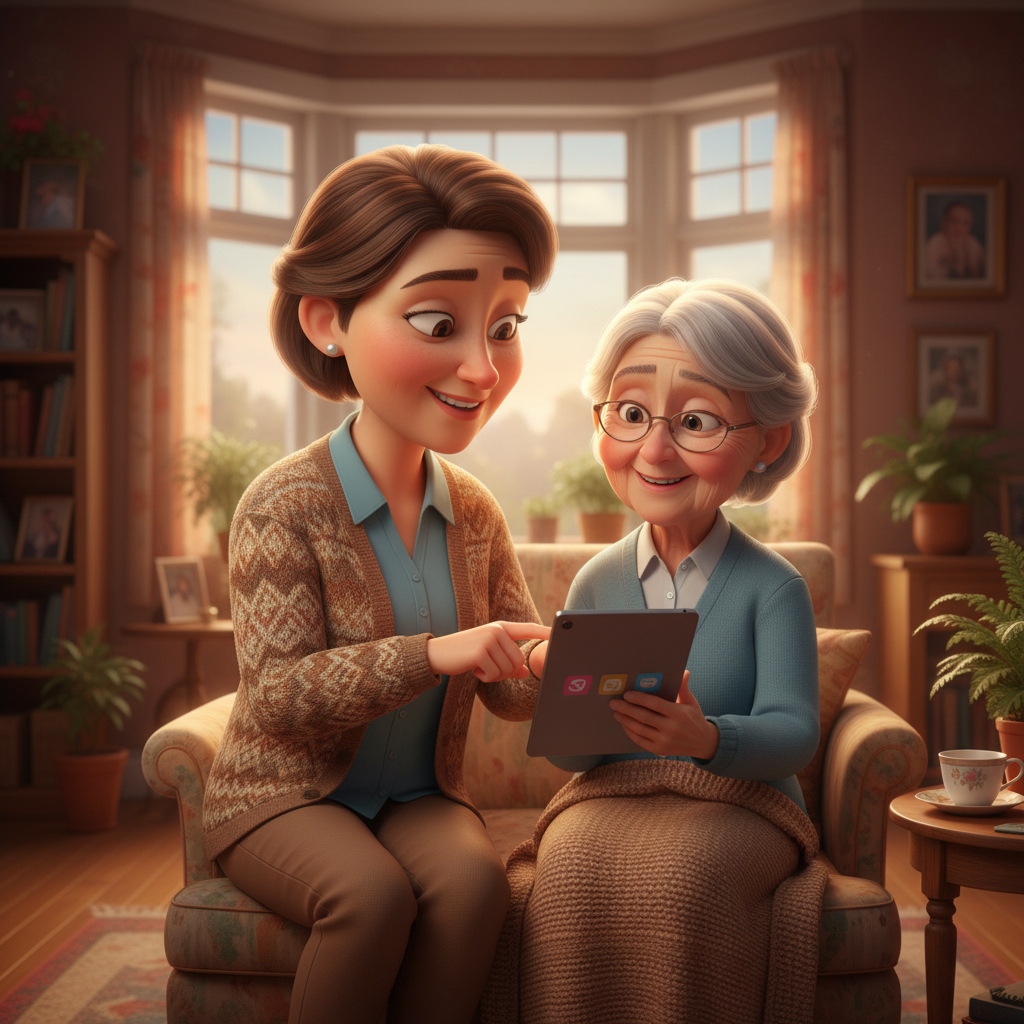
Why Does This Matter for People Receiving Care at Home?
For older people receiving domiciliary care — support in their own homes with personal care, medication prompts, meals or mobility — the lack of joined-up information has historically caused real problems. Families often find themselves acting as the link between services: telling the community nurse what the GP said, letting the care team know about a recent hospital stay, or chasing up test results that nobody else seemed to know about.
This is exhausting, and at its worst, it can be dangerous. Medication errors, missed follow-ups and unnecessary hospital admissions can all stem from poor communication between services. A digital framework that genuinely connects these different teams has the potential to make a real difference to the quality and safety of care at home.
It also matters enormously for families who live at a distance. If your parent receives care at home in Chesterfield and you live in another part of the country, knowing that their care team have access to current, accurate information — rather than relying on handwritten notes or telephone calls — can bring genuine peace of mind.
What Joined-Up Care Could Look Like in Practice
Imagine an older person living in Bolsover who has been recently discharged from Chesterfield Royal Hospital after a short stay. Under the current system, there can be a frustrating gap: the home care team may not be informed straightaway, medication changes might not reach the GP in time, and family members are left making multiple phone calls to piece together what happens next.
A well-implemented digital framework changes that. A discharge summary could be shared automatically with the GP and the domiciliary care provider. The care worker visiting the following morning would know about any new instructions — whether that is a changed medication, an updated mobility assessment, or a wound that needs monitoring. The district nursing team could be notified without the family having to request it separately.
This kind of smooth handover is already happening in parts of England, and NHS Derby and Derbyshire Integrated Care Board — which covers areas including Chesterfield, Bolsover and the surrounding villages — is actively working to expand shared care record access across health and social care services in the region.
What This Means for Families in North East Derbyshire
For families in North East Derbyshire — including those with loved ones receiving care in Chesterfield, Clay Cross, Dronfield, Staveley and the surrounding communities — this shift represents something genuinely hopeful. That said, it is important to have realistic expectations about the timeline. Digital systems take time to implement well, and the quality of care always depends on the people delivering it, not just the tools they use.
What families can reasonably expect over the next few years is better information sharing at points of transition — hospital to home, GP surgery to care team — and a gradual reduction in the burden of having to coordinate information yourself. For those in Worksop and Mansfield, which fall under the Nottinghamshire Integrated Care Board, similar programmes are already underway. The direction of travel across the whole region is consistent: more connected records, more timely communication and a greater focus on keeping people well at home rather than in hospital.
What You Can Do Right Now as a Family
While digital transformation continues to roll out, there are practical things families can do today to support better communication around a loved one's care.
Sign up for the NHS App. If your relative is able to, encourage them to register. It gives access to GP records, medication lists and appointment information — and with the right consent settings in place, some of this can be shared with trusted family members or carers.
Ask your loved one's GP about shared care records. Most GP surgeries in Derbyshire and Nottinghamshire are now part of a shared records programme. It is worth asking whether the home care team have access and whether there is anything you need to do to enable that.
Keep a simple home care folder. Until digital systems are fully joined up, a physical folder at your relative's home — containing a current medication list, key contacts and recent letters — remains one of the most practical tools available. Good care providers will make use of it, and it can be invaluable in an emergency when paramedics or out-of-hours staff attend.
Talk to your care provider. A quality domiciliary care provider will already be working to stay informed about their clients' health needs. Ask how they currently receive updates from the NHS and what systems they use to record and share information internally. Transparency here is always a positive sign.
A Note on Privacy and Choice
Some families worry about digital health records — who can see what, and whether sensitive information might be shared without consent. These are entirely reasonable concerns. The NHS framework includes specific provisions around data privacy and consent, and patients have the right to opt out of certain types of data sharing. The NHS National Data Opt-Out scheme allows people to control how their confidential information is used beyond their direct care.
If you have concerns, it is worth raising them directly with your GP. Most practices are well used to explaining what sharing actually takes place and giving families the information they need to make confident, informed decisions.
Technology Supports Care — It Does Not Replace It
Better digital connectivity in health and care is not about replacing the human elements of good care — the familiar face at the door each morning, the care worker who notices that something seems a little off today, the reassuring conversation when someone is anxious or unsettled. Those things matter enormously and always will.
What digital tools can do is remove friction: the friction of repeated phone calls, the risk of information falling between gaps, the burden on families of being the only thread connecting different services. When that friction is reduced, the people delivering care — whether in a GP surgery, a hospital ward, or a home in North East Derbyshire — can focus on exactly what they are there to do.
At The Right Home Care Team, we are committed to working alongside NHS and social care partners to make the most of these developments, always in the interest of the people we support and the families who care for them.
If you would like to talk about how we support older people to live well at home in Chesterfield, Bolsover, Clay Cross and the surrounding areas — or if you simply have a question about how we co-ordinate with health services on behalf of our clients — we would love to hear from you. Get in touch with our team for a warm, no-obligation conversation.


