



Construction of new care homes is booming across the UK right now, with tens of millions of pounds being poured into purpose-built residential facilities. Modern care homes offer genuinely impressive amenities — en-suite rooms, cafés, landscaped gardens. But surveys consistently show that the vast majority of older people, when asked, want to remain in their own home for as long as possible. For families across Chesterfield, Bolsover, Worksop, and Mansfield, professional domiciliary care offers a compelling alternative that residential living simply cannot match: the familiarity of your own front door, your own kitchen, your own routine — and the one-to-one attention of a carer who knows you as an individual, not as a resident on a rota.
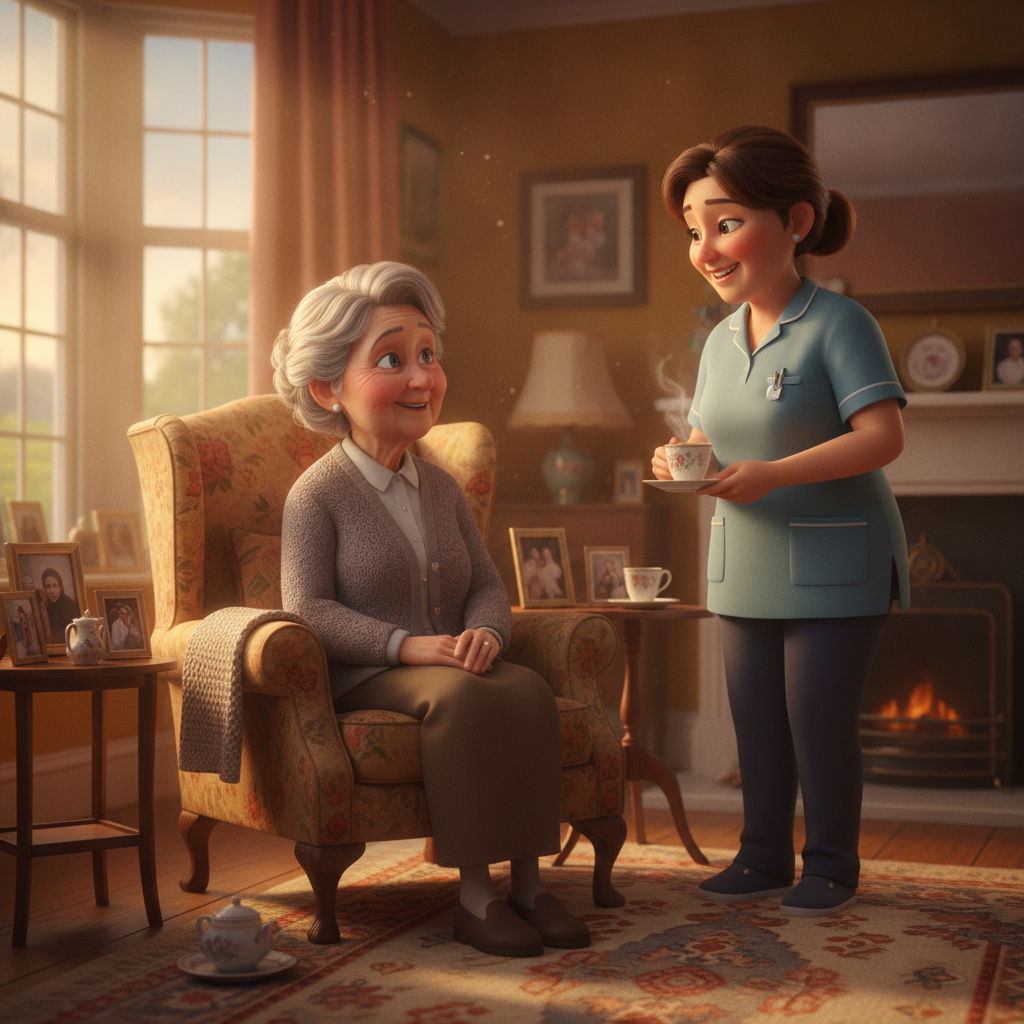
The Pull of Home — and Why It Matters More Than You Might Think
It would be easy to dismiss the desire to stay at home as simple sentiment — nostalgia, stubbornness, or a reluctance to face reality. But the evidence tells a different story. Research consistently shows that older people who remain in familiar surroundings tend to experience better mental health, slower cognitive decline, and a stronger sense of identity and purpose. Home is not just bricks and mortar. It is the chair you have sat in for thirty years, the garden you planted yourself, the neighbours who knock on the door, the street where your grandchildren come to visit.
For many families in North East Derbyshire, the conversation about care starts with a crisis — a fall, a hospital admission, a diagnosis — and suddenly the question of where Mum or Dad should live becomes urgent. In that moment, it can feel as though a care home is the obvious next step. But it rarely has to be. With the right domiciliary care package in place, most people can continue living safely and well in their own home, sometimes for many years longer than families initially expect.

What Modern Home Care Actually Looks Like
The phrase "home help" conjures images of a quick cup of tea and a bit of light dusting. Professional domiciliary care today is something quite different. A well-structured care at home package might include help with getting up and dressed in the morning, medication reminders, meal preparation, personal care, companionship, and support getting out to appointments or social activities. For people with more complex needs — including those living with dementia, Parkinson's disease, or recovering from a stroke — trained carers can provide skilled, consistent support that keeps the person safe at home without the upheaval of a move.
What makes this different from residential care is not just the location. It is the continuity. When you live in a care home, your care is delivered by whichever member of staff happens to be on shift. With domiciliary care from a provider who takes matching seriously, you will often see the same small team of familiar faces — people who know how you take your tea, which television programme you like on a Thursday evening, and when you are having a harder day than usual.
How Families Across Chesterfield and Bolsover Are Making It Work
Across North East Derbyshire, families are finding creative ways to make care at home work for their loved ones. Some start with just a couple of visits a week — perhaps a morning call to help with getting up and a lunchtime check-in — and build from there as needs change. Others put a more intensive package in place from the outset, particularly after a hospital discharge when the person needs additional support while they regain their strength and confidence.
For adult children who live at a distance — a common situation in areas like Worksop and Mansfield, where many families are spread across different towns — knowing that a trusted carer is calling in regularly provides enormous reassurance. That daily contact also means any concerns about health or wellbeing are noticed and acted upon quickly, rather than going unnoticed between family visits.
Honest Questions Worth Asking Before Any Decision
If you are trying to weigh up care at home against residential care for someone you love, these are the questions that tend to matter most in practice:
Does the person want to stay at home? This might seem obvious, but it is worth having a direct conversation, even if it feels difficult. Most people have strong views, and those views deserve to be at the centre of any decision.
Is the home itself suitable? Staying put does not always mean staying unchanged. Minor adaptations — a grab rail by the bath, a ramp at the front door, better lighting on the stairs — can make an enormous difference to safety and confidence. An occupational therapist assessment can identify what is needed.
What level of care is actually required? Domiciliary care works well across a wide range of needs, but it is honest to acknowledge that there are some situations — very high nursing needs, for example, or where someone is no longer safe to be left alone at any point during the day or night — where residential care may be the more appropriate choice. A good care provider will tell you this plainly rather than simply taking on a package that is not right for the person.
What is the family's capacity? Professional carers support — they do not replace — the love and involvement of family. But it is worth being realistic about what family members can manage alongside their own lives and responsibilities. Trying to do too much without professional support often leads to exhaustion on all sides.
Cost: A Comparison Worth Making Carefully
Care home fees in the East Midlands currently average somewhere between £800 and £1,200 per week, depending on location and level of care. Domiciliary care is charged by the hour or by the visit, which means the cost of a home care package can vary considerably — a few hundred pounds a week for light-touch support, through to a similar figure as residential care for intensive packages. What matters is comparing like with like. Residential care includes accommodation, meals, utilities, and all care in one fee. Home care is costed differently, and you will need to factor in the ongoing costs of running the home separately. That said, for many people — particularly those who do not yet require full-time care — home care remains significantly more affordable than residential.
Local authority funding, NHS Continuing Healthcare, and Attendance Allowance are all potential sources of support. Navigating the funding landscape can feel bewildering, but it is worth getting proper advice rather than assuming the family must bear the full cost alone. Age UK and your local council's adult social care team are good starting points.
A Word About What Families Tell Us
Again and again, the families we work with in Chesterfield and across North East Derbyshire tell us the same thing: they wish they had looked into home care sooner. Not because a care home would have been the wrong choice — sometimes it is the right one — but because they had not realised how much professional support could be put in place to help their loved one remain at home safely and happily. The assumption that a care home is the inevitable next step, once things become difficult, turns out very often not to be true.
We Are Happy to Talk It Through
If you are at the beginning of this conversation — trying to understand what options exist, or wondering whether care at home is genuinely feasible for your family member — please do get in touch with The Right Home Care Team. There is no pressure and no obligation. We cover Chesterfield, Bolsover, Worksop, Mansfield, and the surrounding areas, and we are always happy to have an honest conversation about what might work and what might not. Sometimes that conversation alone makes the path forward feel a great deal clearer.


