



New NHS data published this month confirms what many families already know from experience: older people in care settings are being prescribed more medications than ever before. For many, those medicines are genuinely life-saving — managing conditions such as heart failure, diabetes, Parkinson's disease, and chronic pain. But when someone is taking five, eight, or even twelve different tablets a day, keeping on top of the right dose at the right time becomes a real challenge. Missed doses, double doses, and dangerous interactions are all risks that grow with the number of medications involved. In this guide, we look at what families can do to help — and how a professional home care visit can provide that all-important daily medication prompt.

What Is Polypharmacy — and Why Does It Matter?
The clinical term for taking multiple medications simultaneously is polypharmacy. It is generally defined as taking five or more prescribed medicines regularly, though many older adults are managing considerably more than that. As we age, it becomes common to accumulate prescriptions from different specialists — a cardiologist may add a blood thinner, a rheumatologist a steroid, a GP a painkiller — and before long, the medicine cabinet is full to bursting.
This is not necessarily a problem. Many of those medications are doing important work. But the more medicines a person takes, the greater the likelihood of interactions between them, and the harder it becomes to manage the regimen reliably without support. Research consistently shows that medication errors are one of the most common and preventable causes of harm in older adults living at home.
For families across North East Derbyshire — whether your loved one lives in Chesterfield, Bolsover, Dronfield, or a rural village further afield — this is a practical, everyday concern rather than a distant medical statistic.

The Real Risks of Getting It Wrong
It is easy to underestimate how quickly a small medication mistake can become a serious problem for an older person. The risks fall into a few broad categories:
Missed doses are the most common issue. A tablet forgotten in the morning might seem minor, but for medicines that control blood pressure, prevent blood clots, or manage insulin levels, a missed dose can have immediate consequences. Over time, inconsistent adherence can mean a condition becomes progressively harder to control.
Double dosing happens when someone cannot remember whether they have taken their tablets and takes them again to be safe. This is particularly common when memory is affected by dementia or general cognitive decline, and it can cause serious harm depending on the medication involved.
Drug interactions are a subtler but significant risk. Certain combinations of medications — some over-the-counter preparations included — can interfere with one another in ways that affect how well they work or cause unwanted side effects. Grapefruit juice, which many people drink at breakfast, is famously problematic with a number of common heart and cholesterol medications.
Confusion about which tablet is which is also surprisingly common, especially when medications change over time, when different strengths look similar, or when packaging changes due to a different generic manufacturer supplying the pharmacy that month.
Practical Steps Families Can Take
If you are helping an elderly parent or relative manage their medications, there are several practical things you can do to make the process safer and less stressful for everyone involved.
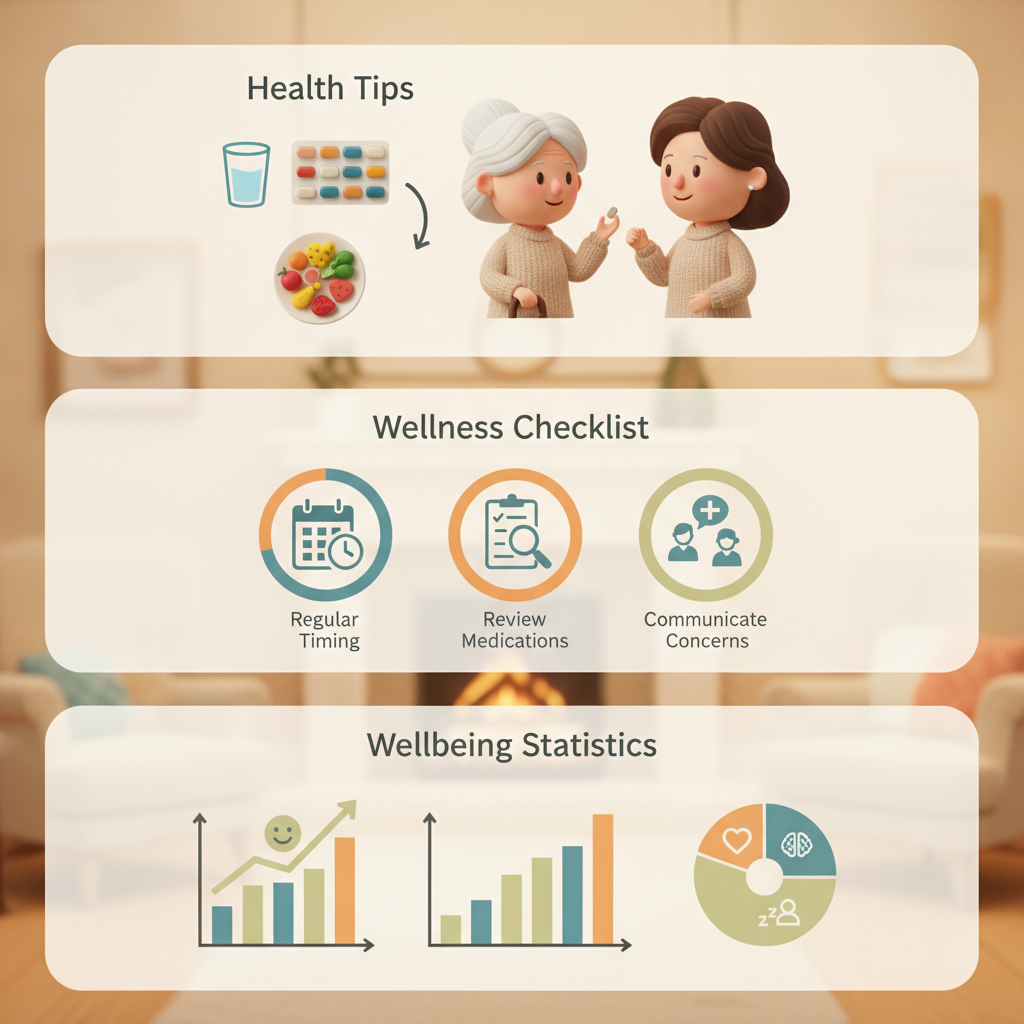
Create a clear medication list. Write down every medication — name, dose, and when it is taken — and keep it somewhere visible, such as on the fridge. Make sure this list also goes with your relative to any GP or hospital appointment, and that it includes any over-the-counter remedies they take regularly.
Use a dosette box or blister pack. A weekly pill organiser with compartments for morning, lunch, evening, and night can make it immediately obvious whether a dose has been taken. Many pharmacies — including those serving communities in Worksop and Mansfield — will prepare pre-filled blister packs (sometimes called monitored dosage systems or MDS trays) free of charge for patients who need them. It is worth asking.
Set reminders. A simple phone alarm, a note on the kettle, or a reminder on a smart speaker can be surprisingly effective for people who are otherwise cognitively sharp but simply have a busy day ahead of them.
Keep it consistent. Medications taken at the same time each day, linked to an existing routine — morning tea, a main meal, bedtime — are much less likely to be forgotten than those with a vague instruction to take "twice a day."
Review the list regularly. Medications added during a hospital admission are not always reviewed once someone returns home. It is entirely reasonable to ask the GP for a medication review, particularly if your relative has recently been in hospital, has had a significant change in their health, or is experiencing side effects they cannot account for.
How a Home Carer Can Help
One of the most valued aspects of a regular home care visit — particularly for families here in North East Derbyshire — is the reassurance of having a trained, familiar face arriving each day to provide a gentle, reliable prompt at medication time.
At The Right Home Care Team, our carers do not administer prescription medications in the clinical sense — that remains the responsibility of the individual or a healthcare professional. But what we can do is provide a consistent daily reminder, assist with opening packaging, prompt the use of a dosette box, and notice when something seems off. If a client mentions feeling dizzy, seems confused, or we spot that a blister pack has not been touched when it should have been, we flag that to the family or the relevant healthcare professional promptly.
For many of our clients — older adults living independently in Chesterfield, Clay Cross, Staveley, and surrounding areas — that daily check-in makes the difference between a medication routine that works and one that gradually unravels.
When to Ask for a Medication Review
A medication review with your relative's GP or pharmacist is one of the most productive conversations you can have on their behalf, yet many families do not know it is available to them on request. NHS pharmacists, in particular, now play an expanded role in reviewing and rationalising prescriptions — and some GP practices in Derbyshire have dedicated clinical pharmacists attached to the surgery.
A good medication review will look at whether each medicine is still necessary, whether the dose is still appropriate for your relative's current weight, kidney function, and general health, and whether any of the medicines might be causing side effects that have been attributed to "just getting older." Fatigue, falls, confusion, and loss of appetite are all potential side effects of common medications in older adults, and they are worth querying.
You do not need to wait for an annual check to request a review. If your relative has recently been discharged from hospital, has started experiencing new symptoms, or you simply feel that the tablet burden has become unmanageable, it is entirely appropriate to ring the surgery and ask.
You Do Not Have to Manage This Alone
Helping an older relative stay on top of a complex medication routine — often from a distance, and often while juggling work and family commitments of your own — can feel quietly exhausting. It is one of those responsibilities that tends to sit in the background of daily life, creating a low-level anxiety that is hard to articulate but very real.
A regular home care visit from a trusted, consistent carer can take a significant portion of that weight off your shoulders. Not because we replace your involvement — far from it — but because we become an extra pair of eyes and hands on the ground, every single day.
If you are thinking about care support for an elderly parent or relative in the Chesterfield, Bolsover, Worksop, or Mansfield areas, we would be glad to have a relaxed, no-obligation conversation about what might help. You can reach The Right Home Care Team by phone or through our website — and there is never any pressure to do anything other than explore your options at your own pace.


