



Some families worry that technology in care means something cold or impersonal. In reality, the best technology should do the opposite: reduce confusion, improve communication and give carers more time to focus on people, not paperwork.
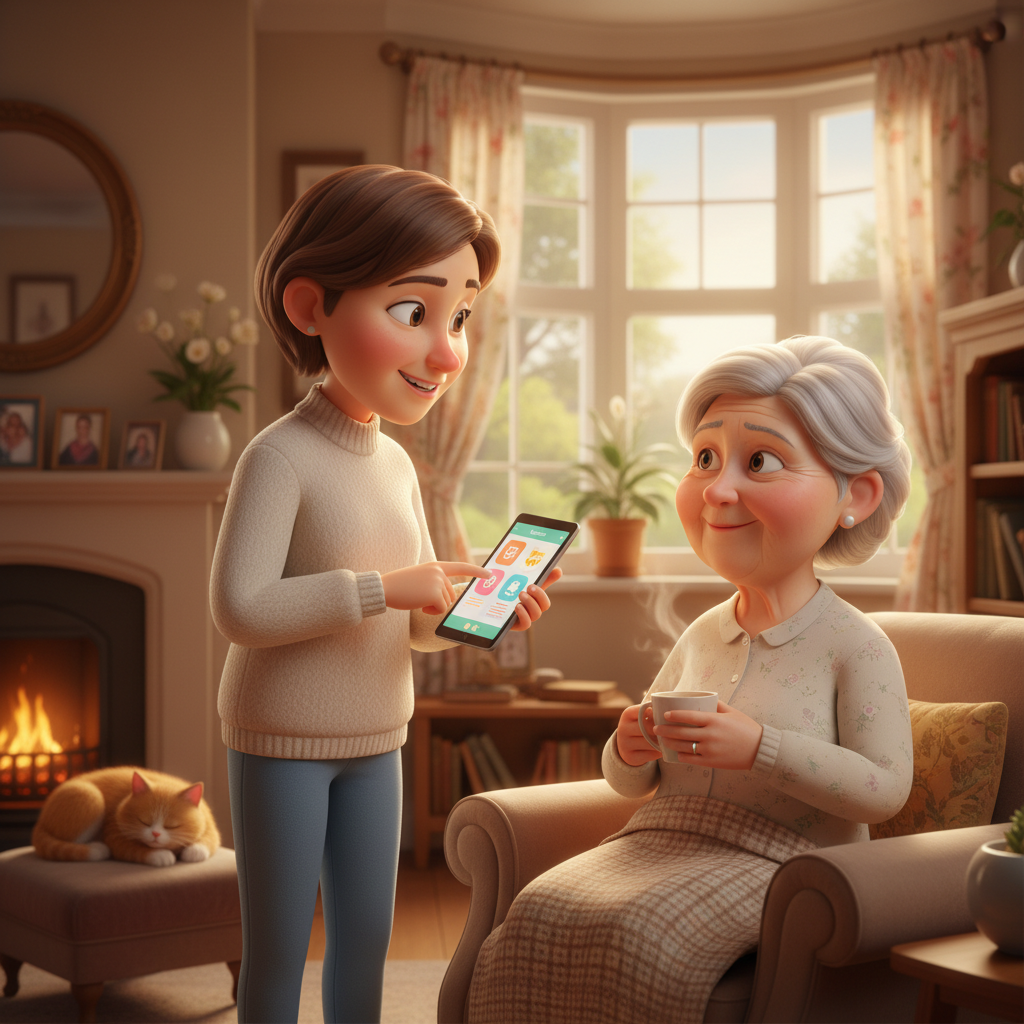
Some families worry that technology in care means something cold or impersonal. In reality, the best technology should do the opposite: reduce confusion, improve communication and give carers more time to focus on people, not paperwork.
This is something we think about carefully at The Right Home Care Team. We work with families across North East Derbyshire — from Chesterfield and Bolsover to the outskirts of Worksop and Mansfield — and we know that what matters most is never a piece of software. It is a carer who shows up reliably, notices when something feels off, and takes the time to sit with someone properly. Technology, when it is used well, simply makes that possible more consistently.
What Does Technology Actually Mean in Domiciliary Care?
When care professionals talk about technology, they are not imagining robots or remote-controlled visits. In practice, it tends to mean things like digital care records, electronic medication prompts, mobile apps that let carers log visit notes in real time, and online portals where family members can check how their loved one is getting on.
None of these replace a carer. But they do reduce the chance of important information being missed, misread, or lost between handovers. In a domiciliary care setting, where a client might see different carers on different days of the week, having everything clearly recorded and instantly accessible can make a real difference to the quality and consistency of care delivered day to day.
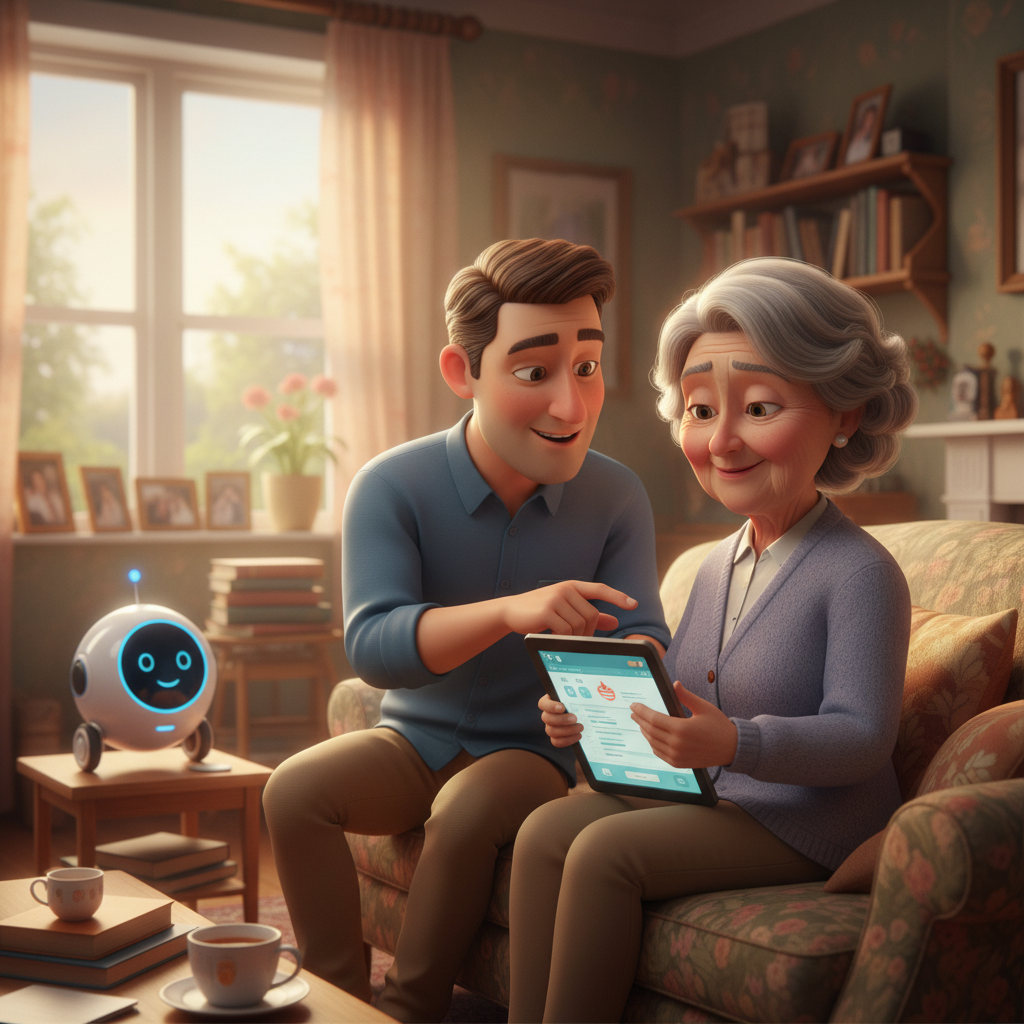
Digital Care Records: Less Paperwork, More Presence
For many years, care documentation meant handwritten notes left in a folder in someone's home. While those folders still exist in some settings, they have real limitations. Notes can be difficult to read, pages can go missing, and important updates can fail to reach the next person who walks through the door.
Digital care records change this significantly. When a carer completes a visit, they can log notes directly from their phone — what was eaten, how a client seemed emotionally, any concerns about mobility or skin condition, whether medication was taken. That information is immediately visible to the care manager, to a GP if needed, and to family members who have been given access.
What this means in practice is that carers spend less time writing and more time being present. A visit that once ended with ten minutes of paperwork can instead end with a proper conversation, a cup of tea, or simply sitting quietly with someone who might not have company again until the following day.
Keeping Families in the Loop Without the Constant Worry
One of the things families tell us most often is that the hardest part of not living with an elderly parent or a loved one is the not knowing. Not knowing if they ate lunch. Not knowing if they seemed confused this morning. Not knowing whether the carer arrived, and how things went.
Technology can ease that particular anxiety considerably. With a family portal or a straightforward update system, a son or daughter in Sheffield — or much further afield — can log in and see a brief note from that morning's visit. Nothing clinical or alarming; just the kind of detail that helps a family member breathe out a little and get on with their day, reassured that someone they love is being looked after well.
It does not replace a phone call when something important happens. But it does mean that families are not left guessing, and that trust between the care team and the wider family can be built steadily over time.
Medication Reminders and Safety in the Home
Medication management is one of the areas where technology can have the most meaningful impact. For someone living alone — perhaps in a village in the Bolsover district or a flat on the outskirts of Chesterfield — keeping on top of multiple medications at the right times of day is genuinely challenging. A missed dose, or a double dose taken by mistake, can have real consequences for health and wellbeing.
Electronic medication prompts, whether through a carer's app, a monitored dosette box, or a simple automated dispenser, provide a valuable extra layer of reassurance. Combined with a carer who checks in and documents what has been taken, these tools help ensure that medication routines are followed accurately and that any concerns are flagged promptly to a family or a GP.
Similarly, technologies like falls sensors, door alarms, and personal alarm pendants can provide genuine peace of mind for people who live alone. These are not surveillance tools — they are safety nets, designed to reduce the time between something going wrong and someone being there to help.
When Technology Goes Wrong — and Why the Human Element Matters More Than Ever
It would be dishonest not to acknowledge that technology has its limitations. Systems go down. Apps have glitches. An older person may find a touchscreen frustrating, or simply may not want one near them, and that is entirely their right.
Good domiciliary care providers understand this. Technology should always support the care relationship — never dominate it or substitute for genuine human contact. If a digital tool is creating stress for a client or their family, it is either the wrong tool, or it is being used in the wrong way.
At The Right Home Care Team, we would never make a client feel monitored rather than cared for. Any technology we use is introduced gently, explained clearly, and only kept in place if it genuinely helps the person receiving care. The individual always remains at the centre — not the system.
Practical Steps Families Can Take
If you are organising care for someone you love, here are a few things worth thinking about when speaking with any care provider.
Ask how visit notes are recorded and how you can access them. Transparency here is always a good sign. Find out what the process is if something concerns a carer during a visit — clear communication pathways matter enormously when things are uncertain.
If your loved one manages their own medication but sometimes forgets, ask a pharmacist about a monitored dosette box or a blister pack — these can reduce risk significantly, even on days when a carer is not present.
Most importantly, follow your loved one's lead. If they are uncomfortable with a particular piece of technology, that discomfort matters and should be respected. The goal of any tool in a care setting is always to reduce anxiety and improve wellbeing — never to add to the burden of daily life.
The Heart of Good Care Has Not Changed
Technology, at its best, is quiet. It works in the background — keeping records accurate, alerting a care manager to a change in a client's routine, letting a daughter in Mansfield know that her mum had a good morning and enjoyed her breakfast. It does not replace the warmth of a familiar face at the door, or the simple value of someone taking a moment to really listen.
That balance — using the best of what thoughtful technology can offer, while keeping care genuinely human — is something we work hard to get right every day across North East Derbyshire and the surrounding areas.
If you are thinking about care at home for yourself or someone you love, we would be very glad to have a conversation. There is no obligation and no pressure — just a straightforward, honest chat about what might help. You are welcome to get in touch with us by phone or through our website, and we will always do our best to listen properly and point you in the right direction.


